ISO 24409-1
Design principles for shipboard safety signs, fire control plan signs, safety notices and safety markings
Accommodation signs identify the shared facilities used every day aboard ship, and carry the short instructions that belong at a door.
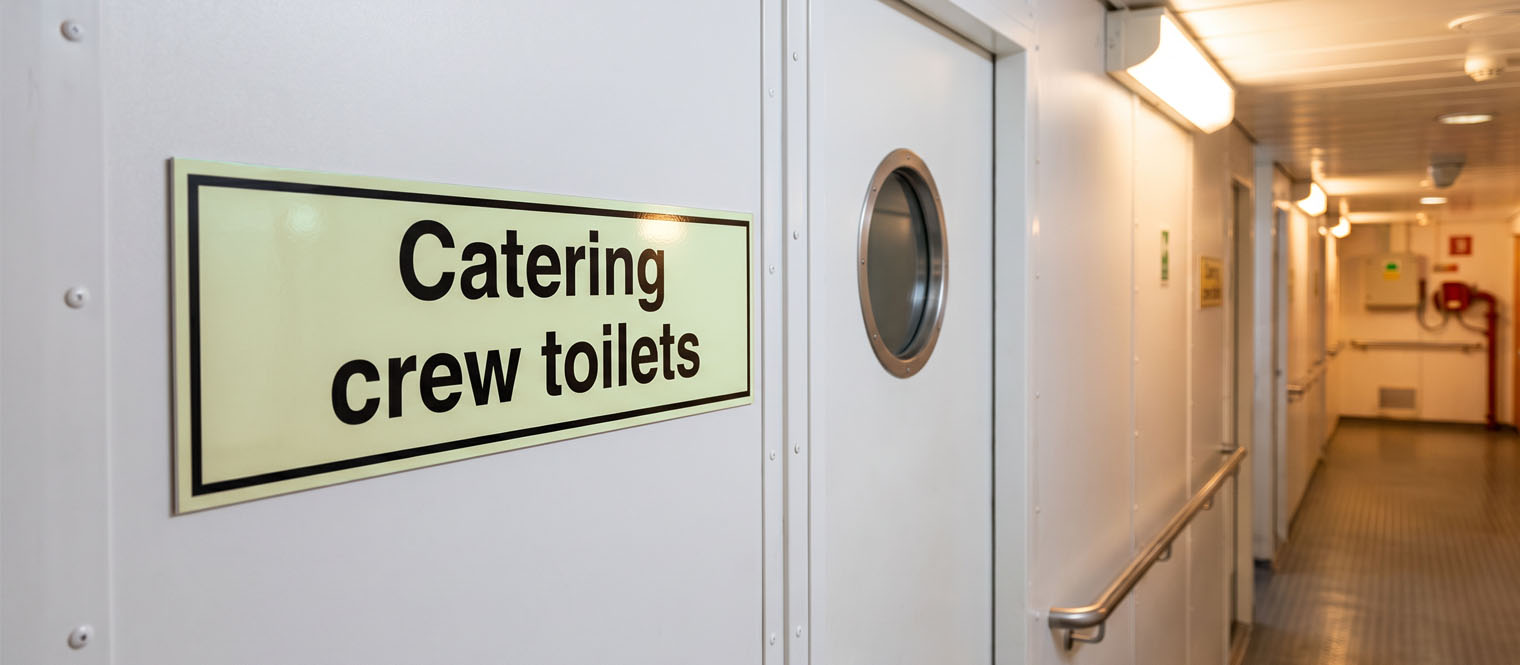
A sign beside the entrance identifies the room before someone opens the door. Toilet signs distinguish the facilities available, including those reserved for particular crew.
The same wording should appear wherever the facility is referred to on board. Joining crew, contractors and visitors use these spaces with different routines, so the name on the door needs to match the name they were given.
Notices about keeping a space clean or leaving a door closed address behaviour rather than identity. Short wording works best when the meaning is specific.
A room name identifies a destination; a notice states what is expected there. Each should be readable in its own position, without the two competing for the same piece of wall.
Push and pull plates tell a person how a door operates. On a vessel where doors are heavy and corridors narrow, that information belongs on the door itself.
Accommodation signage shares space with escape route signs and equipment markers. Everyday directions need to stay distinct from escape directions, so someone looking for a facility can tell the two apart at a glance.
Standards
ISO 24409-1 covers how shipboard signs are designed; ISO 24409-3 covers where they belong and how they are used together.
Design principles for shipboard safety signs, fire control plan signs, safety notices and safety markings
Code of practice: where signs belong on board and how they are used together
Toilet and shared-facility signs, a safety locker sign, a smoking area sign, and push and pull plates for doors — the everyday signage of the accommodation block rather than its emergency marking. Escape direction, exits and muster stations are Means of Escape, and markers for survival equipment are Life-Saving System.
Not as part of this range. Accommodation covers the shared facilities and the doors into them, not cabin numbering or room-name plates made to a vessel's own scheme. If a project needs those, a distributor can say what is possible.
ISO 24409-1 covers how a shipboard sign is designed, and ISO 24409-3 covers where it belongs and how signs are used together. The escape-route resolutions do not govern this range: they apply to escape marking and equipment location, which is Means of Escape.
Rigid plastic or self-adhesive vinyl. The rigid version mounts with screws, adhesive pads or a hanger; the vinyl goes straight onto a clean, dry surface without drilling. Both are produced with a photoluminescent face where the position needs one, and plain where it does not.
No. DENFOIL is supplied through distributors, who quote the specification and handle the order.
Tell us which facilities the area contains and how the signs will be mounted. A distributor quotes the specification.