ISO 24409-1
Design principles for shipboard safety signs, fire control plan signs, safety notices and safety markings
Marine combination signs bring related safety messages together on a single panel, so the person approaching a space has the information needed before entering.
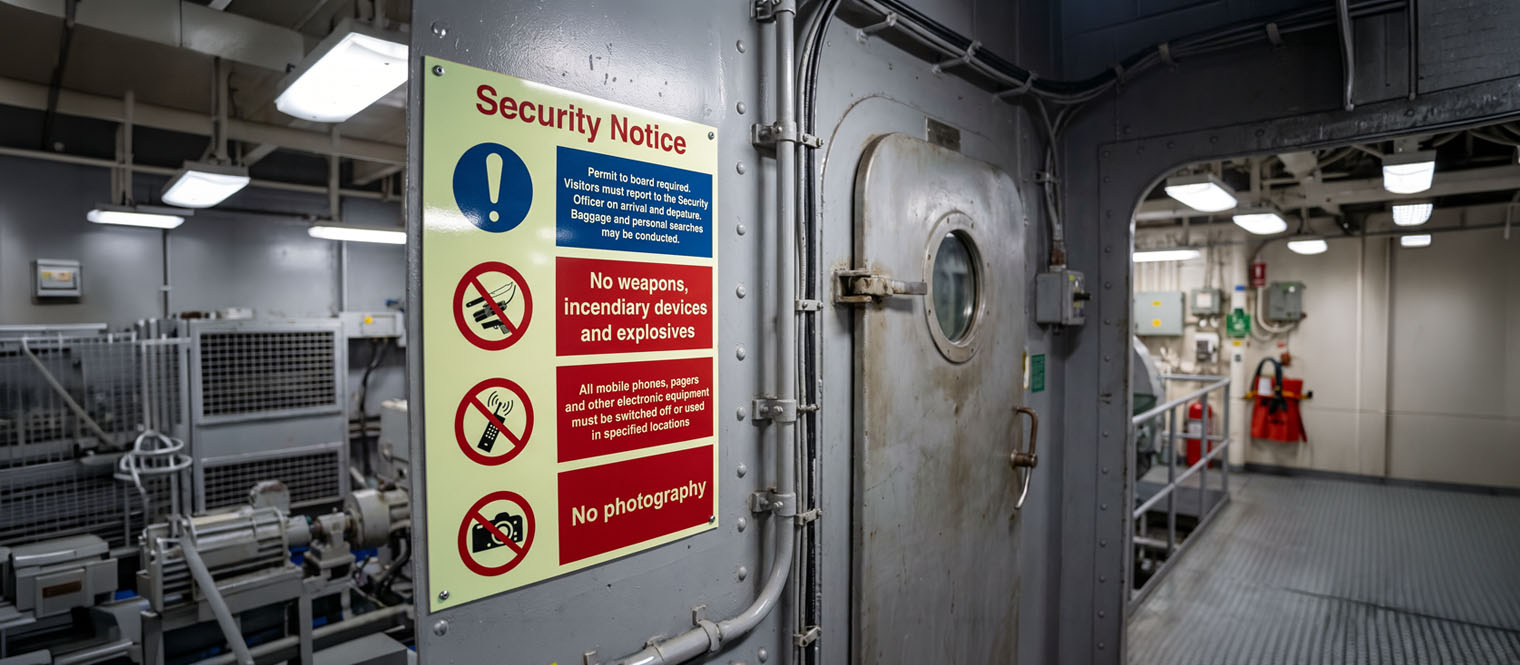
A warning, an entry restriction and a required action can all apply at the same doorway. At a machinery entrance, a panel may identify a noise hazard alongside a hearing protection instruction. At a work deck access point, it may combine protective equipment requirements with restrictions on movement.
The messages belong together because they concern the same activity or space. Combination signs are useful where separate notices would otherwise compete for a small area around an entrance. The panel creates a clear reading order, with the principal hazard or instruction taking priority.
Typical applications include workshops, machinery spaces, vehicle deck entrances and access to enclosed work areas. The appropriate content depends on what happens beyond the sign.
A panel at an entrance describes the conditions that apply to entering the area. A more specific instruction may still be needed beside a machine or control further inside. The entrance message and the local instruction should agree.
A useful combination sign includes only the information relevant at that point. Adding unrelated warnings makes the important instruction harder to find.
The exact wording, symbols and language should reflect the vessel's working arrangements. For a replacement panel, the existing sign is a reference, but the current use of the space determines what the new message needs to say.
Standards
ISO 24409-1 covers how shipboard signs are designed; ISO 24409-3 covers where they belong and how they are used together.
Design principles for shipboard safety signs, fire control plan signs, safety notices and safety markings
Code of practice: where signs belong on board and how they are used together
One panel carrying several related messages — typically a warning, an entry restriction and a required action that all apply at the same place. It replaces a cluster of separate signs around a doorway, and it fixes the reading order so the principal message is found first.
When the messages concern the same space or activity and there is limited room around the entrance. Where an instruction applies further inside, beside a particular machine or control, it belongs at that item rather than on the entrance panel.
ISO 24409-1 covers how a shipboard sign is designed. ISO 24409-3 is the code of practice for where signs belong and how they are used together, which is the part that matters most when several messages share one panel. The symbols are the same ones used on the single-message signs.
By what happens beyond it. A panel at an entrance describes the conditions that apply to entering the area; unrelated warnings added to it make the important instruction harder to find. Where a panel is being replaced, the existing one is a reference, but the current use of the space decides the new message.
No. DENFOIL is supplied through distributors, who quote the specification and handle the order.
Tell us what happens beyond the door and which messages apply there. A distributor quotes the specification.