ISO 24409-1
Design principles for shipboard safety signs, fire control plan signs, safety notices and safety markings
Marine hazard and warning signs draw attention to dangers at the point where people may encounter them, from electrical equipment and hot surfaces to low overhead clearance.
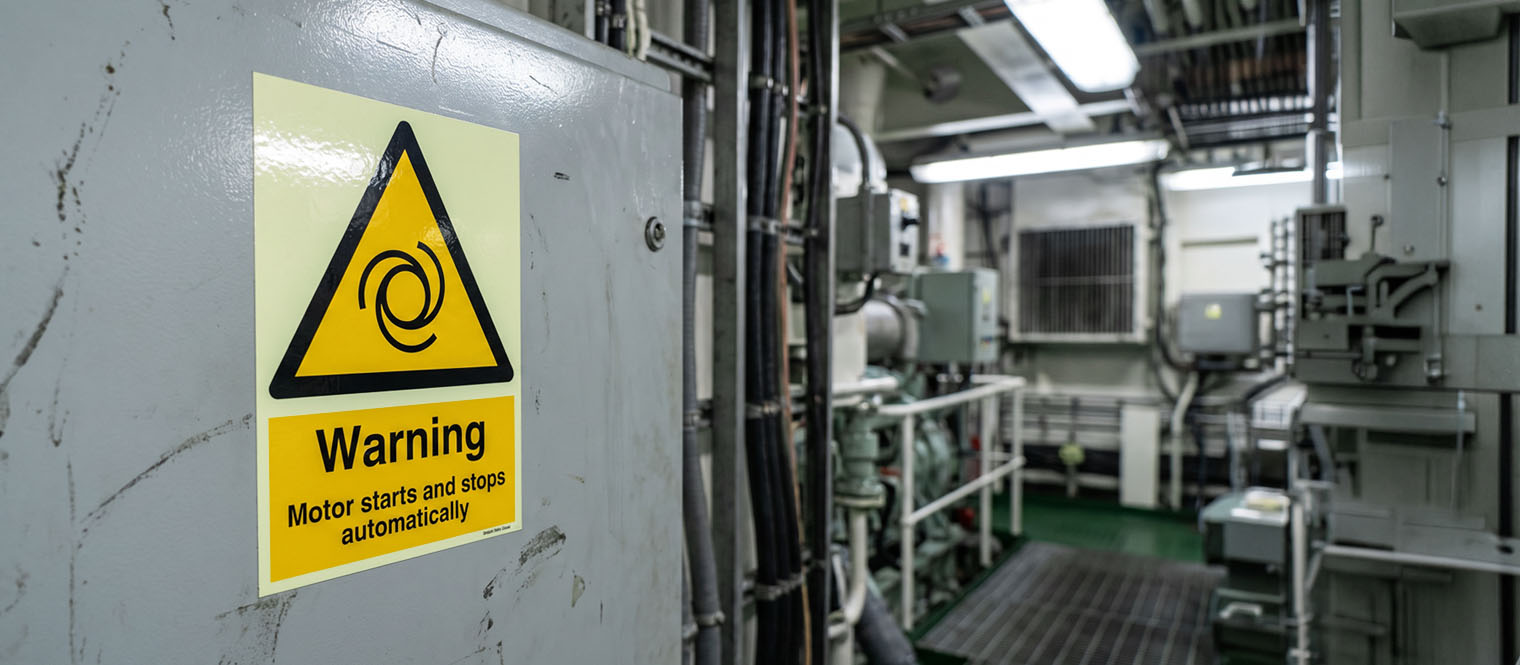
A useful warning gives someone information before they reach the danger, rather than after they have passed it.
Machinery spaces contain equipment and access routes close together. A person walking through an engine room may pass a hot surface or electrical enclosure without working on it.
The warning should have a clear connection to the item concerned. A sign beside a cabinet identifies a local hazard; a notice at the entrance describes a condition affecting the space beyond it.
On deck, warnings can identify falling-object hazards, changes in level or dangers associated with the work taking place. Low headroom and steep access points also need information on the approach, where there is time and room to respond.
Enclosed-space warnings require particular clarity about the location. The message should identify the space without implying that a warning sign itself establishes permission to enter.
Specific wording is more useful than a general caution when the danger is known. The symbol and any accompanying text should describe the same hazard.
Warnings can appear alongside mandatory actions and prohibitions. These serve different purposes: the warning identifies the danger, while the other messages state the action or restriction that applies. Where they concern the same entrance, a combination sign can keep the information together.
Standards
ISO 24409-1 covers how shipboard signs are designed; ISO 24409-3 covers where they belong and how they are used together.
Design principles for shipboard safety signs, fire control plan signs, safety notices and safety markings
Code of practice: where signs belong on board and how they are used together
Warnings for machinery and technical spaces, electrical hazards, hot surfaces, deck hazards and restricted working areas — signs whose job is to identify a danger rather than to instruct or restrict.
Where it gives information before the danger is reached rather than after it has been passed. A sign beside a cabinet identifies a local hazard; a notice at the entrance describes a condition affecting the space beyond it. The two are not interchangeable.
ISO 24409-1 covers how a shipboard warning sign is designed and ISO 24409-3 covers where it belongs and how it is used with other signs.
A warning identifies the danger. A mandatory sign states the action required, and a prohibition sign states what must not be done. Where all of them apply at the same entrance, a combination sign keeps them together in one reading order.
No. DENFOIL is supplied through distributors, who quote the specification and handle the order.
Related safety messages brought together on one panel at an entrance.
View categoryTell us which hazards are present and where people meet them. A distributor quotes the specification.